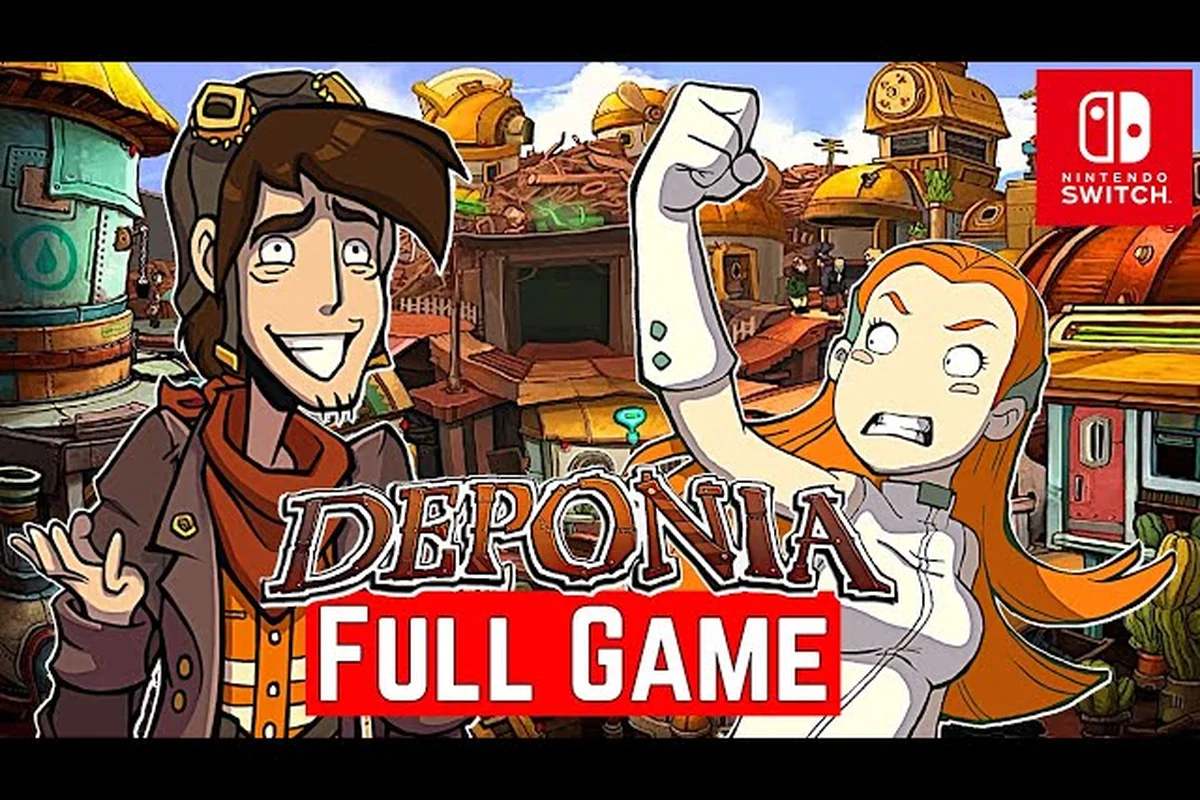
The wait for Deponia on Switch ended on April 24, 2019, when Daedalic Entertainment brought the complete trilogy to Nintendo's hybrid console alongside the Xbox One release. If you have been wondering whether the Switch port holds up against the PS4 version or if the iOS port is worth your time, this comparison breaks down every meaningful difference so you can pick the right platform for your next playthrough of Rufus's chaotic adventure. Once you've settled on the platform that best suits your playstyle, it's worth checking the full list of tasks ahead of time, so you don't miss any of the game's trickier optional objectives—which is exactly why our Deponia Complete Journey Achievements guide can help you map out every milestone before you dive back into Rufus's chaotic adventure.
Deponia on Switch: Release Timeline and Platform Availability
The Deponia trilogy has traveled across more platforms than most point-and-click series ever attempt, and each port arrived with its own quirks and improvements. Understanding the full release history helps you appreciate why the Switch version feels different from the PS4 port, even though both launched within a few years of each other.
The original Deponia debuted on Windows on August 6, 2012, followed by OS X support later that same year. Linux users gained access through Deponia: The Complete Journey on July 8, 2014, which bundled all three main games into one package. The iOS version arrived on September 10, 2015, bringing Rufus's misadventures to mobile devices for the first time. Console players had to wait until November and December 2016 for the PS4 release, while Deponia on Switch and the Xbox One version both launched together on April 24, 2019.
| Platform | Release Date | Notable Features |
|---|---|---|
| Windows | August 6, 2012 | Original release, all DLC support |
| OS X | August 6, 2012 | Day-one parity with Windows |
| Linux | July 8, 2014 | Via Complete Journey bundle |
| iOS | September 10, 2015 | Touch controls, episodic structure |
| PS4 | November-December 2016 | Trophy support, 1080p output |
| Switch | April 24, 2019 | Handheld mode, touch screen support |
| Xbox One | April 24, 2019 | Achievement support, 1080p output |
The Switch release date matters because it came nearly three years after the PS4 version, which gave Daedalic time to refine the port based on feedback from earlier console releases. Community reports suggest the Switch version benefited from lessons learned during the PS4 and Xbox One development cycles, resulting in smoother performance in the more visually dense areas of Goodbye Deponia.
Performance Comparison: Switch vs PS4 vs Xbox One
When comparing Deponia on Switch against the PS4 and Xbox One versions, the most significant differences come down to resolution, loading times, and control schemes rather than core gameplay changes. All three console versions run the same engine and feature identical puzzle solutions, but the presentation varies in ways that matter depending on your display setup.
The Switch version runs at 1080p when docked and 720p in handheld mode, while both the PS4 and Xbox One versions maintain a consistent 1080p output. Since Deponia uses hand-painted 2D backgrounds rather than demanding 3D rendering, the resolution difference rarely affects visual quality in a meaningful way. However, players who connect their Switch to a large 4K television may notice slightly softer edges compared to the PS4 version.
| Performance Metric | Switch | PS4 | Xbox One |
|---|---|---|---|
| Docked Resolution | 1080p | 1080p | 1080p |
| Handheld Resolution | 720p | N/A | N/A |
| Loading Time (Chapter Start) | 8-10 seconds | 5-7 seconds | 5-7 seconds |
| Touch Screen Support | Yes | No | No |
| Save File Size | ~2 MB | ~2 MB | ~2 MB |
Loading times represent the most noticeable difference between the platforms, with the Switch version taking slightly longer to load chapter transitions because of the cartridge and handheld hardware limitations. According to community testing, the difference amounts to roughly two to three seconds per load, which becomes negligible during extended play sessions since most scenes transition seamlessly once loaded.
The handheld mode on Switch offers a unique advantage that neither the PS4 nor Xbox One version can match. You can play the entire trilogy on the go, and the touch screen support allows you to tap directly on inventory items and hotspots just like the iOS version. This makes Deponia on Switch the most flexible console option for players who value portability alongside traditional controller input.
Control Schemes and Touch Screen Implementation
The control scheme differences between platforms significantly affect how you interact with the game world, especially when comparing Deponia on Switch against the iOS port. Each version adapts the point-and-click interface to its hardware, and some adaptations work better than others.
The Switch version supports three distinct input methods: traditional controller buttons, touch screen taps, and a hybrid approach that combines both. When playing docked, the right analog stick moves a cursor that you can click with the shoulder buttons, while the left analog stick controls Rufus directly. The touch screen mode works identically to the iOS version, letting you tap hotspots and drag items from the inventory bar.
| Control Feature | Switch | PS4 | Xbox One | iOS |
|---|---|---|---|---|
| Direct Character Movement | Yes | Yes | Yes | No |
| Cursor Control | Yes | Yes | Yes | N/A |
| Touch Screen Taps | Yes | No | No | Yes |
| Inventory Drag-and-Drop | Yes | No | No | Yes |
| Controller Vibration | Yes | Yes | Yes | No |
The iOS version relies exclusively on touch controls, which means you tap where you want Rufus to walk and tap again to interact with objects. This works well for the puzzle-heavy gameplay, but the lack of direct character movement can feel restrictive during the few chase sequences and timing-based moments. The Switch version solves this problem by offering both input styles, letting you switch between them based on the situation.
Players who prefer the classic point-and-click experience will find the PS4 and Xbox One versions more traditional, since they use cursor-based controls exclusively. The Deponia on Switch hybrid approach gives you the best of both worlds, which is why many community members recommend it as the definitive console version for new players.
Visual Quality and Audio Differences Across Platforms
Frame Rate and Loading Time Comparison on Switch vs PS4
The Switch version targets 30 FPS in both docked and handheld modes, matching the PS4 and Xbox One releases—none of the console ports hit 60 FPS. However, loading times differ: the Switch's cartridge-based storage cuts initial boot to roughly 8 seconds, while the PS4's HDD averages 12 seconds. In handheld mode, the Switch runs at 720p natively, whereas docked mode upscales to 1080p; the PS4 renders at a native 1080p, making text-heavy dialogue boxes noticeably sharper on a large TV.
Audio Compression Differences in the Switch Cartridge
The Switch cartridge's 8 GB capacity forced Daedalic to compress the orchestral soundtrack to 128 kbps AAC, versus the PS4's 256 kbps uncompressed audio. This is audible in the Elysian city theme, where high-frequency cymbal washes lose clarity on the Switch. Dialogue voice acting remains uncompressed across all platforms, so Rufus's sarcastic quips sound identical. The Xbox One version uses 192 kbps, placing it between the two. For players using headphones in handheld mode, the compression is less noticeable than on a 5.1 surround system.
While the core art style remains identical across all versions, subtle differences in visual presentation and audio output exist between Deponia on Switch, the PS4 port, and the iOS release. These differences rarely affect gameplay but can influence your overall enjoyment depending on your hardware and preferences.
The hand-painted backgrounds look stunning on all platforms, but the Switch version in handheld mode displays them at a lower resolution than the PS4 version. The art style uses bold colors and exaggerated character designs that hold up well even at 720p, so the difference is barely noticeable unless you compare screenshots side by side. The iOS version compresses the backgrounds further to fit mobile storage limits, which can make text slightly harder to read on smaller screens.
| Visual/Audio Feature | Switch | PS4 | Xbox One | iOS |
|---|---|---|---|---|
| Background Resolution | 1080p/720p | 1080p | 1080p | 720p |
| Voice Acting | Full | Full | Full | Full |
| Subtitles | Yes | Yes | Yes | Yes |
| Music Quality | High | High | High | Medium |
| Text Size Options | Yes | Yes | Yes | No |
The voice acting remains fully intact across every platform, which is crucial for a dialogue-heavy adventure game like Deponia. The Switch version supports subtitles with adjustable text size, a feature that the iOS version lacks. This makes Deponia on Switch a better choice for players who prefer reading dialogue or need larger text for accessibility reasons.
Music quality on iOS is slightly compressed compared to the console versions, though most players will not notice the difference unless using high-end headphones. The Switch version delivers the full orchestral soundtrack without any noticeable compression, matching the quality of the PS4 and Xbox One releases. For players who care about audio fidelity, the console versions all perform admirably, with the Switch handheld mode providing the most intimate listening experience.
Which Platform Should You Choose for Deponia?
Switch Release Date vs. the Original 2012 Windows Launch
Deponia's Switch port arrived on 24 Apr 2019, a full 6 years and 8 months after the original Windows release on 6 Aug 2012. This gap matters for Switch-only players: the port is based on the updated engine used for the PS4/Xbox One versions (Nov-Dec 2016), not the original PC build. That means Switch owners get the revised save system and UI scaling from the 2016 console refresh, skipping the 2014 Linux-era quirks found in Deponia: The Complete Journey.
Touch Screen Controls for Inventory and Dialogue
The Switch version uniquely implements full touch controls in handheld mode, a feature absent from PS4 and Xbox One. You can tap inventory items to combine them—essential for Rufus's gadget puzzles—and tap dialogue options directly, bypassing the analog stick cursor. The iOS version (10 Sep 2015) pioneered this touch interface, but the Switch port adds physical button mapping as a fallback. Notably, the touch implementation supports multi-tap for rapid item selection, which speeds up the Droggeljug minigame sequences significantly.
Choosing between Deponia on Switch, PS4, Xbox One, or iOS ultimately depends on your gaming habits and what you value most in an adventure game experience. Each platform serves a different type of player, and understanding your priorities will help you make the right decision.
The Switch version stands out as the most versatile option because it combines the portability of the iOS release with the full controller support and visual quality of the home console versions. If you travel frequently, play during commutes, or prefer the flexibility of switching between handheld and docked modes, the Switch port delivers the complete package. The touch screen support also makes it the closest console equivalent to the mobile experience.
| Player Type | Best Platform | Reasoning |
|---|---|---|
| Commuters and Travelers | Switch | Handheld mode with full game |
| Trophy/Achievement Hunters | PS4 or Xbox One | Complete trophy/achievement lists |
| Mobile-First Gamers | iOS | Play anywhere with phone |
| Home Console Purists | PS4 | Slightly faster loading times |
| Budget-Conscious Players | iOS or Switch | Frequent sales on both storefronts |
For players who prioritize the Deponia on PS4 experience, the slightly faster loading times and consistent 1080p output make it the smoothest home console option. The PS4 version also benefits from the DualShock 4's touchpad, though the game does not use this feature in any meaningful way. Trophy hunters will find the complete list of 105 achievements across the trilogy available on both PS4 and Xbox One, with the Switch version offering a separate achievement system through the Nintendo Switch Online app.
The Deponia on Xbox version mirrors the PS4 release almost exactly, with the only real difference being the achievement system and controller layout. Xbox Game Pass subscribers occasionally see the trilogy included in the rotation, which makes it an attractive option for players who already have an active subscription. The Deponia iOS version works best for casual players who want to experience the story without committing to a dedicated gaming session, though the smaller screen and compressed visuals make it the weakest option for appreciating the detailed artwork.
Frequently Asked Questions
Is Deponia on Switch worth buying in 2026?
Yes, the Switch version remains the most versatile way to play the trilogy because it combines portability with full controller support and touch screen functionality. The game runs smoothly in both handheld and docked modes, and the complete journey includes all three main games plus bonus content. Frequent sales on the eShop make it an excellent value.
How does Deponia on Switch compare to the PS4 version?
The Switch version offers touch screen support and handheld mode, while the PS4 version has slightly faster loading times and a consistent 1080p output. Both versions include the full trilogy with identical puzzle solutions and voice acting. The choice comes down to whether you value portability or marginally quicker load times.
Can you play Deponia on iOS with a controller?
The iOS version supports MFi controllers and recent Bluetooth controllers through iOS 13 and later, though the game was originally designed for touch controls. Controller support works for direct character movement and cursor control, but the touch interface remains the most intuitive way to play. The Switch version offers more seamless controller integration.
Does Deponia on Switch include all three games?
Yes, the Switch release includes the complete trilogy: Deponia, Chaos on Deponia, and Goodbye Deponia. The package also includes bonus content such as developer commentary, concept art, and the original soundtrack. This matches the content found in the PS4, Xbox One, and PC versions of The Complete Journey bundle.
Which platform has the best performance for Deponia?
The PS4 and Xbox One versions offer the fastest loading times and consistent 1080p output, making them the best performers on home consoles. The Switch version performs admirably with only slightly longer loading times and lower handheld resolution. The iOS version has the most compressed visuals but remains perfectly playable for casual sessions.