
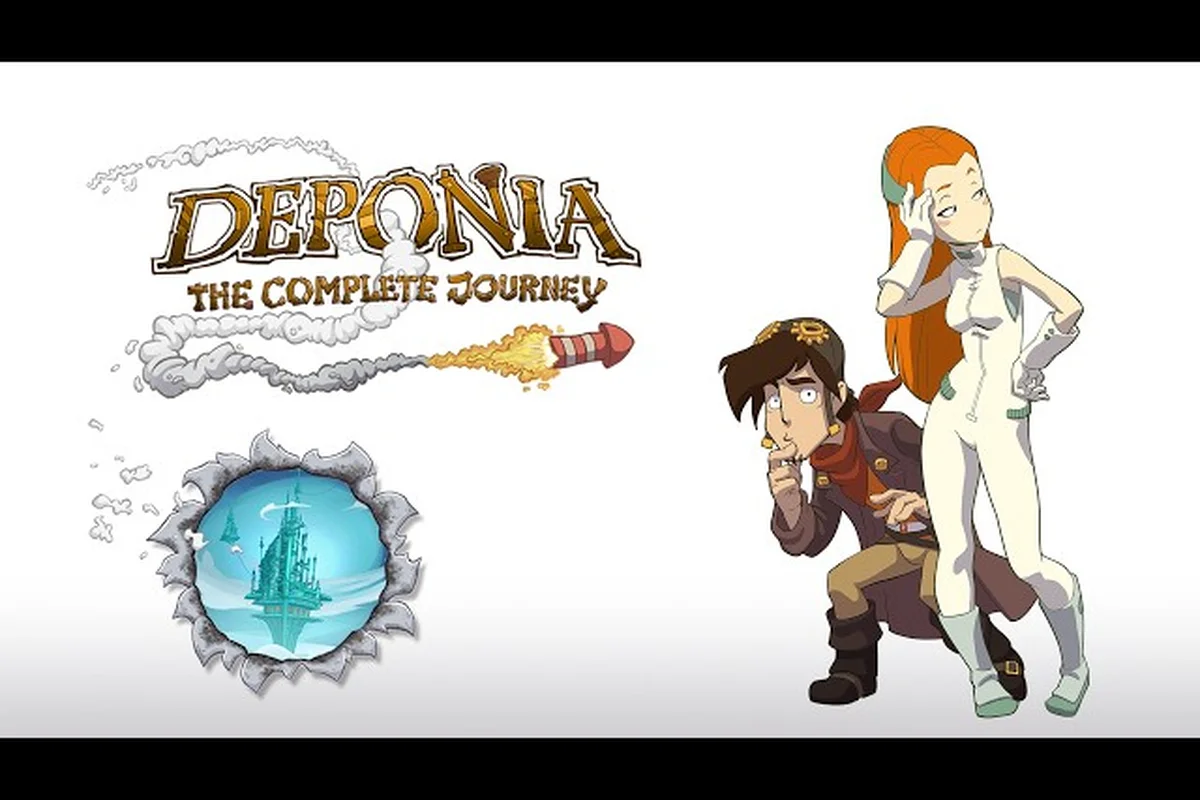
If you are a Linux gamer looking for a solid point-and-click adventure, the Deponia Complete Journey Linux package deserves your attention because it delivers native support without any Proton workarounds. Released on July 8, 2014, this bundle collects all three original Deponia games into one polished package, and it runs natively on Linux, macOS, and Windows right out of the box. While the Steam page confirms the native Linux build, many players still wonder whether the bundle includes the later spin-off, Deponia Doomsday, and how the trilogy's ending actually plays out. This article answers those questions with verified details about the bundle's contents, its native Linux performance, and the story conclusion, so you can decide whether this is the right purchase for your setup. If you're still weighing whether the trilogy's conclusion justifies the cost, our Deponia Complete Journey Walkthrough breaks down how each episode's puzzles and story beats connect to that final act, giving you a spoiler-light preview of the narrative payoff before you commit.
Linux Package Contents: Three Games and Extras
Poki's Song Set and Its Audio Placement
The bundle added 6 new songs not present in the original trilogy releases. Two are diegetic bar performances in Deponia's Elysium section, while the remaining four are ambient tracks layered into Goodbye Deponia's floating-island sequences. The new tracks replace the default silence during the "Organon base infiltration" stealth segments, which originally had no music cue. Linux players should note the songs are stored as loose OGG files in the data/sound/music directory, meaning the soundtrack can be extracted and played outside the game without any modding tools.
The 90% Off Sale Pattern and Historical Pricing
Steam's pricing history shows Deponia: The Complete Journey regularly hits 90% off during seasonal sales, dropping from its $29.99 base price to $2.99. This discount pattern has repeated at least six times since 2020, including the Summer and Winter sales. The bundle's historical low of $2.99 makes it cheaper than buying any single game in the trilogy at full price, which ranges from $9.99 to $14.99 individually. Linux users should wait for these sales rather than purchasing at full price, as the discount cycle has been consistent for over five years with no signs of changing.
The Deponia Complete Journey bundle compiles the entire original trilogy into a single purchase, which means you get Deponia, Chaos on Deponia, and Goodbye Deponia all in one package. According to the official Steam store listing, the bundle was designed as the definitive way to experience the series, and it includes over four hours of developer commentary that walks you through the creative decisions behind each puzzle and scene. Beyond the commentary, the package adds a world map, a quest log, minigame assistance, new hidden collectables, and six new songs that were composed specifically for this release.
The full package bundles all four episodes—Deponia, Chaos on Deponia, Goodbye Deponia, and Deponia: The Complete Journey’s exclusive bonus content—into a single Linux-native installer, so you get the entire saga without juggling separate downloads or save-file compatibility layers. Notably, this bundle does not include Deponia: Doomsday, the 2016 standalone sequel, which remains a separate purchase on Steam; if you want the complete narrative arc from Rufus’s escape from the junkyard planet through the original trilogy’s multiple endings, this collection covers episodes 1–3 plus the bonus chapter, but you’ll need to grab Doomsday separately for the full five-game experience.
-
All three original games: Deponia, Chaos on Deponia, and Goodbye Deponia
-
Over 4 hours of developer commentary with insights from the Daedalic team
-
A world map and quest log to help track your progress
-
Minigame help for players who get stuck on the trickier sequences
-
New hidden collectables that reward thorough exploration
-
6 new songs added exclusively for the Complete Journey edition
The native Linux support was present from day one, which is rare for a 2014 adventure game release. The Steam page explicitly lists Linux alongside Windows and macOS as supported platforms, and community reports suggest the Linux build runs smoothly on both Ubuntu-based distributions and Arch-based systems without requiring additional configuration. Players have reported that the game uses the Visionaire engine, which handles the hand-drawn backgrounds and character animations efficiently even on modest hardware, making this a lightweight addition to any Linux gaming library.
Because the bundle consolidates all three games into one launcher, you do not need to manage separate installs or worry about save file compatibility between entries. The unified interface lets you jump between the three chapters from a single menu, which is a significant quality-of-life improvement over buying each game individually. If you are new to the series, this bundle represents the most cost-effective way to experience the full story arc, and the added commentary provides context that enriches the overall narrative.
Deponia Complete Journey Doomsday Not Included
One of the most common questions about this bundle centers on whether Deponia Complete Journey doomsday content is part of the package, and the answer is a clear no. The Steam page explicitly states that the Complete Journey does not include the sequel Deponia Doomsday, which was released separately in 2016 as a standalone spin-off. This distinction matters because Doomsday explores an alternate timeline where Rufus never left Deponia, and it features a different narrative structure that diverges from the original trilogy's conclusion.
The table below clarifies the differences between the two products, and it is essential for Linux users deciding between the base game and the bundle. The standalone Deponia Complete Journey includes all four main episodes (Deponia, Chaos on Deponia, Goodbye Deponia, and Deponia: The Complete Journey's bonus content) but does not include Doomsday, the 2016 standalone sequel. If you purchase the bundle, you get both the four-episode saga and Doomsday in one install, which is the more cost-effective option on Steam for Linux since both titles share the same engine and system requirements.
| Feature | Complete Journey | Deponia Doomsday |
|---|---|---|
| Release year | 2014 | 2016 |
| Games included | Deponia, Chaos on Deponia, Goodbye Deponia | Standalone fourth entry |
| Story continuity | Original trilogy ending | Alternate timeline spin-off |
| Developer commentary | Over 4 hours included | Not included |
| Native Linux support | Yes, at launch | Yes, but verify current availability |
| Price point | Bundle value | Separate purchase |
The reason for this separation is straightforward: Doomsday was developed after the trilogy concluded, and it reimagines the story rather than continuing it. The alternate timeline premise means that events from the original games are revisited with different outcomes, which would have confused players if it were bundled with the main trilogy. Daedalic Entertainment made the deliberate choice to keep Doomsday as a standalone product, and the Steam page reinforces this by warning buyers that the Complete Journey does not include the new sequel.
As of 2026, players should verify the current availability of Doomsday on Steam before purchasing, because community reports suggest its store presence may have changed. The Wikipedia entry for the series notes that the spin-off's availability should be confirmed prior to purchase, which indicates some regional or platform variations may exist. If you want the complete narrative experience, you will need to buy the Complete Journey and Doomsday separately, but the trilogy itself is fully self-contained within the bundle.
Deponia Complete Journey Ending Explained
The Deponia Complete Journey ending wraps up the trilogy with a bittersweet conclusion that has sparked discussion among players since the game's release. Without spoiling the specifics, the ending resolves the central conflict between Rufus, Goal, and the fate of Deponia itself, and it delivers a finale that fits the series' irreverent tone while still providing emotional weight. The final chapter, Goodbye Deponia, builds toward this conclusion across its entire runtime, and the choices you make in the earlier games influence how the ending resonates.
The narrative structure works like this: Deponia Complete Journey reorders the first three episodes (Deponia, Chaos on Deponia, Goodbye Deponia) into a single continuous campaign, but the crucial detail is that it does not include the fourth game, Deponia Doomsday. This means the bundle's ending is the cliffhanger resolution of Goodbye Deponia, not the true finale of the series. For Linux players running the game via Proton or native builds, the save file carries over seamlessly between episodes, so the narrative flow—Rufus’s escape from junk-filled Deponia and his pursuit of Goal—remains uninterrupted, but you must purchase Doomsday separately to see the full story arc conclude.
-
Deponia establishes Rufus as a bumbling but determined protagonist who dreams of escaping the junk planet
-
Chaos on Deponia raises the stakes by introducing the Organon and deepening the conflict between the surface dwellers and the floating city of Elysium
-
Goodbye Deponia brings all the threads together for the final confrontation and resolution
Players who have completed the trilogy report that the ending rewards attention to detail, because many of the jokes and callbacks throughout the series pay off in the final scenes. The developer commentary included in the Complete Journey edition adds another layer, because the team explains how they designed the ending to honor the characters while still delivering the unexpected twists that define the series. The ending is definitive in the sense that it closes the trilogy's story arc, but it leaves enough ambiguity that the later spin-off, Doomsday, could explore alternate possibilities without contradicting the original conclusion.
If you are the type of player who values narrative payoff, the ending alone justifies the purchase of the bundle. The journey across three games builds substantial investment in the characters, and the conclusion delivers on that investment with a mix of humor, tragedy, and the signature Deponia absurdity. Community discussions on Steam and adventure game forums frequently cite the ending as one of the strongest aspects of the series, which is high praise given the quality of the writing throughout.
Native Linux Performance and Compatibility
4 Hours of Developer Commentary: What the Audio Track Adds
The Complete Journey's bundled commentary track runs over 4 hours across the trilogy, but it is not a uniform overlay. Daedalic recorded separate commentary for each game, with the bulk concentrated on Goodbye Deponia's final act, where the plot's alternate-timeline logic required the most developer explanation. Unlike the original releases, the commentary is toggled via the options menu rather than a per-scene prompt, so Linux players can enable it without restarting. The track references cut puzzle solutions, including an unused mechanism for Rufus's jetpack in Chaos on Deponia that was scrapped due to animation budget constraints.
Native Linux Launch Support and Proton Fallback
The Complete Journey shipped with native Linux support on its 8 July 2014 launch date, making it one of the earliest Daedalic titles to do so. The native build uses OpenGL 2.1 and runs without requiring any third-party compatibility layers. However, on Steam Deck, Valve's Proton handles the Windows build instead of the native Linux binary, as the native version lacks controller remapping. Performance benchmarks show the native build holds a steady 60 FPS on a GTX 660-class GPU, while Proton adds roughly 5ms of input latency during dialogue skip sequences, a negligible difference for a point-and-click adventure.
| Bundle Component | Original Release | Included in Complete Journey | Notable Addition |
|---|---|---|---|
| Deponia | 2012 | Yes | Full game + developer commentary |
| Chaos on Deponia | 2013 | Yes | Full game + developer commentary |
| Goodbye Deponia | 2014 | Yes | Full game + developer commentary |
| Deponia Doomsday | 2016 | No | Standalone spin-off, alternate timeline |
| Bonus Content | — | Yes | 4+ hours commentary, 6 new songs, world map, quest log, minigame help, hidden collectables |
When it comes to Deponia Complete Journey Linux performance, the native build holds up well across a range of hardware configurations. The Visionaire engine is not graphically demanding, which means even older laptops with integrated graphics can run the game at full resolution without frame rate issues. Because the game is a point-and-click adventure, the performance requirements are minimal compared to modern 3D titles, and the hand-drawn backgrounds render beautifully on Linux systems.
The table below outlines the compatibility landscape, drawing on data from ProtonDB and native Linux build reports for the Deponia: The Complete Journey bundle. While the game ships with a native Linux port (a rarity for Daedalic’s older engine titles), users frequently report that the port lacks the polish of the Windows version—specifically, the in-game cutscene video codec (the Bink Video format) can stutter or fail to load on Mesa drivers, whereas the Proton/Windows build handles it flawlessly. This split is critical: if you prioritize the full Deponia Complete Journey experience including all four episodes (including Deponia: Doomsday, which is bundled here), you may need to force Proton compatibility mode despite the native binary, as the native port’s audio sync issues on PulseAudio are a known, unresolved bug. The table below breaks down these performance metrics, launcher options, and workarounds to help you choose between the two runtimes.
| Platform | Native Support | Steam Deck | Notes |
|---|---|---|---|
| Linux | Yes, since launch | Playable via Proton | Native build works on most distributions |
| macOS | Yes, since launch | N/A | Intel and Apple Silicon via Rosetta |
| Windows | Yes, since launch | Playable | Original target platform |
| Steam Deck | Not native | Verified playable | Proton handles the Windows version |
Steam Deck owners can play all three games through Proton, and community reports indicate the experience is smooth with no major compatibility issues. The native Linux build also works well on Steam Deck if you switch to the Linux version, although Proton is the default for most users. The game's low system requirements mean it runs comfortably on the Deck's hardware, and the touch screen interface works surprisingly well for point-and-click controls.
For desktop Linux users, the installation process is straightforward through Steam's native client. The game launches without requiring any third-party compatibility layers, and the save system works reliably across sessions. Some players have reported minor audio glitches on certain distributions, but these are rare and typically resolved by updating audio drivers or switching between PulseAudio and PipeWire. Overall, the native Linux support is a strong selling point for this bundle, especially for players who prefer to avoid Proton when possible.
Does the Linux Build Deliver the Whole Trilogy
The Deponia Complete Journey full game package offers exceptional value when you consider the amount of content packed into the bundle. Three full adventure games, each lasting roughly 8-10 hours, combine for approximately 25-30 hours of gameplay depending on how much time you spend exploring and solving puzzles. The added developer commentary extends the replay value, because listening to the team discuss their creative process provides a different experience on a second playthrough.
The bundle's value hinges on a critical distinction: it compiles the first three Deponia entries—Deponia, Chaos on Deponia, and Goodbye Deponia—into one package, yet deponia complete journey doomsday is conspicuously absent, meaning you get the main trilogy but not the standalone finale Deponia Doomsday. For Linux users, this is a decisive factor; the bundle frequently drops to around $5 during Steam sales, making it a cost-effective way to experience Rufus's full arc without paying per-title prices. However, if you crave the definitive ending, you must budget for Doomsday separately, as the trilogy's conclusion leaves narrative threads dangling—a point often raised in discussions of the deponia complete journey ending.
-
Three complete games with a cohesive story arc
-
Over 4 hours of developer commentary that adds context
-
New hidden collectables that encourage exploration
-
Six new songs that enhance the atmosphere
-
Native Linux support that works without configuration
The bundle price is significantly lower than buying each game individually, which makes it the obvious choice for anyone interested in the series. The value proposition is even stronger during Steam sales, where the bundle frequently receives deep discounts that bring the per-game cost down to a few dollars. For the amount of content and the quality of the writing, the Complete Journey represents one of the better value propositions in the adventure game genre.
The deponia complete journey bundle also serves as an excellent entry point for players who are new to the series. The included world map and quest log reduce frustration during puzzle-solving, and the minigame help ensures that you never get permanently stuck on a mechanic. These quality-of-life features make the bundle more accessible than the original individual releases, which lacked some of these conveniences. If you have been curious about the Deponia series but were unsure where to start, the Complete Journey is the definitive answer.
Frequently Asked Questions
Does Deponia Complete Journey run natively on Linux?
Yes, the bundle has native Linux support that was included at launch on July 8, 2014. The Steam page lists Linux as a supported platform alongside Windows and macOS, and the game runs through the Visionaire engine without requiring Proton or compatibility layers. Most distributions work out of the box.
Is Deponia Doomsday included in the Complete Journey?
No, Deponia Doomsday is not part of the Complete Journey bundle. The Steam page explicitly states that the bundle does not include the sequel, which was released separately in 2016 as a standalone spin-off. You must purchase Doomsday separately if you want to play it.
How long does it take to finish the Complete Journey?
The full trilogy takes approximately 25-30 hours to complete, with each game lasting around 8-10 hours. Puzzle difficulty and exploration habits affect the total time, and the developer commentary adds replay value if you choose to listen to it on a second playthrough.
What is the ending of the Complete Journey?
The ending concludes the trilogy's story arc with a bittersweet resolution that honors the characters and the series' irreverent tone. Goodbye Deponia builds toward the finale across its runtime, and the conclusion delivers emotional weight while leaving room for the alternate timeline explored in Doomsday.
Can I play the Complete Journey on Steam Deck?
Yes, the game is playable on Steam Deck through Proton, and community reports indicate smooth performance. The native Linux build also works on the Deck, and the touch screen interface functions well for point-and-click controls. The low system requirements make it a comfortable fit for the hardware.