
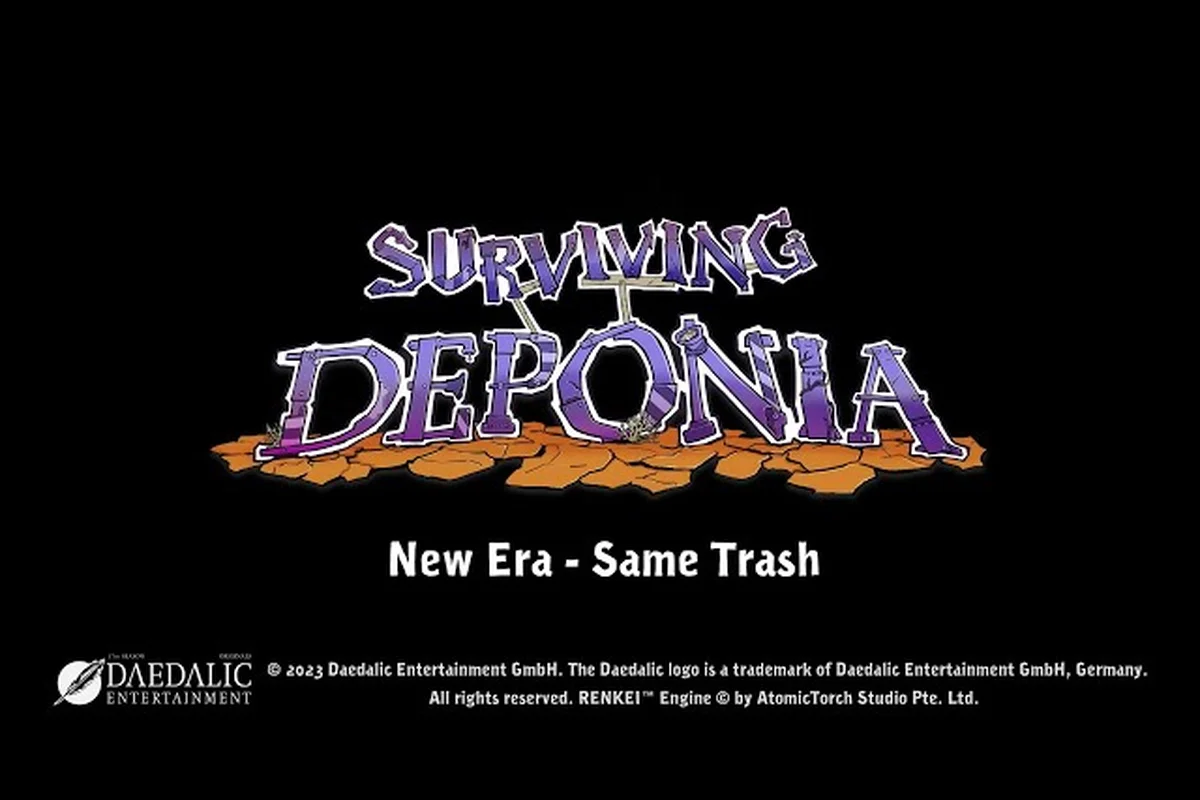
The Deponia surviving sequel finally has a name, a release window, and a genre twist that nobody saw coming. Surviving Deponia, launching in 2026 from Daedalic Entertainment and AtomicTorch Studio, abandons the classic point-and-click formula of the original trilogy in favor of survival-crafting mechanics set seven years after the events of Goodbye Deponia. This isn't just another entry in the deponia series — it's a full genre pivot that recontextualizes everything fans thought they knew about the junk planet. If you've been following the deponia games since the 2012 original, this guide breaks down exactly how the new installment connects to the deponia trilogy, what AtomicTorch's involvement means for gameplay, and whether you need to replay deponia 1 before jumping in. Following the deponia games since the 2012 original, this guide breaks down exactly how the new installment connects to the deponia trilogy, what AtomicTorch's involvement means for gameplay, and whether you need to replay deponia 1 before jumping in—and if you're worried about how the story's cliffhangers resolve, our breakdown of the Surviving Deponia Ending clarifies which threads carry over directly into this new chapter.
The Deponia Series Guide: From Point-and-Click to Survival Crafting
Metacritic Trajectory: Why Sequels Outscored the Original
The trilogy's review scores climbed with each entry: Deponia (2012) holds a 74 Metacritic, Chaos on Deponia (2012) jumped to 78, and Goodbye Deponia (2013) peaked at 80. This 6-point spread reflects fan consensus that puzzle complexity improved significantly in the sequels. For Surviving Deponia (2026), this trajectory sets a high bar—AtomicTorch Studio must translate the series' puzzle-design evolution into survival mechanics, where the 2016 spin-off Deponia Doomsday already tested narrative branching that the survival sequel can build upon.
AtomicTorch's Genre Shift: From Daedalic Puzzles to Crafting Loops
The sequel marks a developer handoff: Daedalic Entertainment's point-and-click puzzle design is replaced by AtomicTorch Studio's survival-crafting systems, known from their work on resource-management titles. Unlike the original trilogy's inventory-based puzzles—where progression required combining specific items in fixed sequences—Surviving Deponia introduces open-ended crafting loops where players gather raw materials to build tools and shelter. This mechanical shift explains why the 2026 release targets a different audience than the 2012-2013 point-and-click fanbase.
| Game | Release Year | Metacritic Score |
|---|---|---|
| Deponia | 2012 | 74 |
| Chaos on Deponia | 2012 | 78 |
| Goodbye Deponia | 2013 | 80 |
The deponia series has always been defined by its witty dialogue, absurd puzzles, and the perpetually unlucky protagonist Rufus. The original trilogy — Deponia (2012), Chaos on Deponia (2012), and Goodbye Deponia (2013) — earned solid reception across the board, with Metacritic scores climbing from 74 for the first game to 78 for Chaos on Deponia and peaking at 80 for the finale. Fans consistently rank the sequels above the original for puzzle complexity, which makes the upcoming survival sequel such a fascinating departure from the established formula.
Surviving Deponia represents the biggest structural shift in the franchise's history. Instead of inventory-based puzzle solving, you'll gather resources, build shelters, and manage survival meters across the junk-strewn landscape. The deponia surviving sequel keeps the satirical tone and environmental storytelling, but the gameplay loop now revolves around crafting and base building rather than dialogue trees and item combinations.
Here's how the core identity shifts across the franchise: the original Deponia trilogy (Deponia 1 through Deponia 3) is built entirely around Rufus's inventory-based puzzle logic—combining absurd items like the "Groovy" tape or the "Clothes Iron" to trigger scripted comedic failures. The 2025 survival sequel, however, discards that linear puzzle-box structure in favor of a resource-driven loop, forcing players to scavenge scrap metal and "Goat Fuel" from the junkyard planet's ruins to craft tools and fortify shelters. This shift from narrative-driven trial-and-error to systemic survival crafting fundamentally changes the player's relationship with the world: instead of solving static screens for story progression, you're managing hunger, thirst, and environmental hazards in real-time, meaning the witty dialogue and puzzle logic now serve as rewards for successful scavenging runs rather than the primary gameplay driver.
-
Deponia 1 established the comedic tone and introduced Rufus's dream of escaping the junk planet, with classic adventure game mechanics and inventory puzzles.
-
Chaos on Deponia doubled down on puzzle complexity, introducing multi-character switching and more elaborate item interactions that critics praised.
-
Goodbye Deponia wrapped the trilogy with emotional stakes and a definitive ending that closed Rufus's arc — which makes the seven-year time jump in Surviving Deponia particularly intriguing.
-
Deponia Doomsday (2016) served as a standalone spin-off that played with alternate timelines, but it remains separate from the mainline continuity.
-
Surviving Deponia (2026) reboots the gameplay entirely while maintaining narrative continuity, which is unprecedented for the franchise.
The reception pattern across the deponia games reveals an interesting trend that directly informs what to expect from the deponia surviving sequel. Each mainline entry improved on the last in terms of critical reception, and the developers at AtomicTorch Studio — best known for their work on survival titles — bring a completely different skill set to the franchise. According to the official Steam page for Surviving Deponia, the game is positioned as the next mainline installment in the Deponia universe, not a spin-off or side project.
Surviving Deponia Story: Seven Years After the Trilogy
The narrative hook for the deponia surviving sequel is deceptively simple: what happens to the people left behind on a planet that was supposed to be abandoned? The trilogy ended with significant upheaval, and Surviving Deponia picks up seven years later with a society that has adapted to life on the junk planet in unexpected ways. While the original deponia games focused on escape, this new entry flips the premise entirely — survival now means staying and rebuilding rather than leaving.
The time jump allows the developers to reinvent the world while preserving continuity. Characters from the deponia trilogy appear older, wiser, and shaped by the intervening years, and the environmental storytelling shows how the planet's inhabitants have repurposed the garbage that once defined their existence. The deponia series guide approach to narrative here is smart: it honors what came before without being shackled to the puzzle structure that defined earlier entries.
Key story elements confirmed so far: the sequel picks up seven years after the trilogy’s ending, with protagonist Rufus now a middle-aged man grappling with the consequences of his actions on the reconstructed Deponia. Daedalic Entertainment has confirmed the return of core mechanics like the item-combination puzzle system and the iconic dialogue-wheel arguments between Rufus and his companions, while introducing a darker tone that shifts the series’ signature slapstick humor toward more mature themes. Notably, the game’s official synopsis hints at a new antagonist tied to the Organon’s remnants, suggesting the sequel will revisit the political fallout of the trilogy’s climax rather than starting fresh.
-
Seven-year time gap between Goodbye Deponia and Surviving Deponia, allowing for significant world-building changes.
-
Survival themes replace the escape narrative, with the planet's residents now viewing Deponia as home rather than a prison.
-
Familiar faces return in new roles, though the playable protagonist appears to be a new character rather than Rufus.
-
Environmental storytelling carries much of the lore, with ruined structures and repurposed technology telling the story of the intervening years.
-
Tonal continuity remains intact, with the same satirical edge that defined the deponia games, even as the gameplay mechanics shift dramatically.
The connection to the deponia trilogy matters more than you might expect. According to community reports and the Wikipedia entry on the Deponia series, the series order runs Deponia (2012), Chaos on Deponia (2012), Goodbye Deponia (2013), the bundle Deponia: The Complete Journey (2014), the spin-off Deponia Doomsday (2016), and now Surviving Deponia (2026). Understanding this timeline helps contextualize why the deponia surviving sequel takes the narrative direction it does — the escape plot has been resolved, so the only way forward is to explore what comes after.
AtomicTorch Studio's Survival Mechanics and Crafting Systems
The biggest question surrounding the deponia surviving sequel is how AtomicTorch Studio's survival expertise translates to the Deponia universe. The studio has built its reputation on resource management, environmental hazards, and base building, and Surviving Deponia appears to integrate these systems with the franchise's signature humor. The result is a survival game that doesn't take itself too seriously, even when you're desperately scavenging for clean water or reinforcing your shelter against the planet's harsh conditions.
The crafting system forms the backbone of the gameplay loop, and it's designed to feel familiar to survival genre veterans while introducing enough unique mechanics to distinguish itself. Resource gathering follows standard patterns — you'll harvest scrap metal, organic materials, and various junk items scattered across the environment — but the Deponia twist comes from how these resources interact with the world's established lore. The junk that was once the backdrop for puzzle-solving is now the raw material for everything you build.
Here's a breakdown of the core survival systems: managing Rust's (or the protagonist's) health, energy, and oxygen meters is only the beginning—you'll also need to track inventory weight limits and item durability, which directly impacts how long you can scavenge before a forced return to base. For example, crafting a Recycler early to break down junk into raw materials is critical, as it lets you convert heavy scrap into lighter, stackable components, effectively doubling your carrying capacity per trip. Understanding these interlocking mechanics is what separates a quick death from a sustained run through the Deponia trilogy.
| System | Function | Deponia Twist |
|---|---|---|
| Resource Gathering | Collect scrap, organic matter, and rare components | Junk items have unique properties tied to lore |
| Base Building | Construct shelters, storage, and crafting stations | Structures use repurposed Deponia technology |
| Survival Meters | Manage hunger, thirst, and environmental protection | Junk planet hazards create unique pressure |
| Crafting Recipes | Combine materials into tools, weapons, and utilities | Recipes reference trilogy-era items and jokes |
| Day/Night Cycle | Time management affects resource availability | Night brings unique threats and opportunities |
The survival mechanics in the deponia surviving sequel are designed to be accessible to newcomers while offering depth for genre veterans. AtomicTorch's experience with survival game pacing shows in the early game progression — you're never overwhelmed with systems all at once, but there's always another layer to unlock. The crafting tree branches in meaningful directions, and the deponia series guide approach to tutorials ensures that even players who've never touched a survival game can find their footing.
Comparing Surviving Deponia to the Original Deponia Games
Seven-Year Time Jump: Bridging Goodbye Deponia to 2026
Surviving Deponia (2026) is set exactly 7 years after the trilogy's conclusion, making it the first mainline installment since Goodbye Deponia (2013). This gap mirrors the real-world 13-year development hiatus between the trilogy's end and the sequel's release. The time jump allows AtomicTorch Studio to reset the world state—the junkyard planet's resources have presumably shifted from the comedic scavenging of the originals to genuine survival scarcity, a tonal pivot that distinguishes the sequel from the 2014 bundle Deponia: The Complete Journey.
Franchise Timeline: Positioning Surviving Deponia in Series Order
Surviving Deponia (2026) sits at the chronological end of the franchise: Deponia (2012), Chaos on Deponia (2012), Goodbye Deponia (2013), the bundle Deponia: The Complete Journey (2014), and the spin-off Deponia Doomsday (2016) all precede it. This ordering matters for new players—the survival sequel assumes knowledge of the trilogy's ending, particularly the fate of protagonist Rufus. The 7-year narrative gap also allows the sequel to reference Doomsday's alternate-timeline events without requiring players to have completed the spin-off.
The deponia surviving sequel represents such a dramatic departure from the deponia games that came before that it's worth examining the comparison directly. Fans of the original trilogy will find familiar elements — the humor, the world, the satirical edge — but the moment-to-moment gameplay shares almost nothing with the point-and-click adventures that defined the franchise. This isn't necessarily a bad thing, but it does mean adjusting expectations.
The table below breaks down the key differences between the original Deponia trilogy and Surviving Deponia, focusing on how the spin-off shifts from the classic point-and-click puzzle structure of Deponia 1–3 into a resource-management survival format. Where the trilogy relied on Rufus’s inventory-based item combinations and dialogue trees to progress the story, Surviving Deponia replaces that with turn-based crafting and scavenging loops, forcing players to prioritize food, scrap, and fuel over narrative progression. This table highlights the mechanical pivot—such as the removal of the Chronos system and the introduction of a day-night cycle—that defines the deponia surviving sequel experience.
| Aspect | Original Trilogy | Surviving Deponia |
|---|---|---|
| Genre | Point-and-click adventure | Survival crafting |
| Core Loop | Inventory puzzles and dialogue | Resource gathering and base building |
| Protagonist | Rufus (single character) | New character (name TBA) |
| Perspective | Third-person with static screens | Likely third-person over-shoulder or isometric |
| Difficulty | Puzzle complexity | Survival pressure and resource management |
| Story Focus | Escape from Deponia | Rebuilding and thriving on Deponia |
| Replay Value | Multiple solutions to puzzles | Procedural elements and base building variety |
The comparison reveals that the deponia surviving sequel is essentially a new game wearing the Deponia skin, which could be either a strength or a weakness depending on your perspective. Players who loved the deponia trilogy specifically for its puzzle design might feel alienated by the shift to survival mechanics, while newcomers who bounced off the adventure game genre might find the new approach more accessible. The reception data from the original deponia games — with Metacritic scores of 74, 78, and 80 respectively — suggests that the franchise has always been willing to evolve, even if this evolution is more radical than anything attempted before.
The deponia series guide approach to this transition matters for player expectations. Rather than trying to be both a point-and-click adventure and a survival game simultaneously, Surviving Deponia commits fully to the survival genre while preserving the narrative voice that made the deponia games memorable. The puzzles that defined the trilogy are replaced by environmental challenges and crafting decisions, which creates a different but equally valid form of problem-solving.
What the 2026 Release Means for the Deponia Franchise
The 2026 release of Surviving Deponia carries significant implications for the deponia series as a whole. This isn't just another entry in a long-running franchise — it's a test of whether the Deponia universe can support genres beyond the point-and-click adventures that defined it. The involvement of AtomicTorch Studio signals that Daedalic Entertainment sees long-term potential in the IP, and the survival genre's popularity makes it a logical expansion target.
For players coming from the deponia trilogy, the transition requires a mindset shift. The deponia surviving sequel demands different skills — resource management, spatial planning, and long-term strategy rather than lateral thinking and item combination. The deponia series guide for this new entry emphasizes that survival games reward different player behaviors, and the learning curve reflects that shift. Players who struggled with the obtuse puzzle logic of deponia 1 might actually find the survival mechanics more intuitive, while puzzle purists may need to adjust their expectations.
Since the 2012 original, the deponia series has evolved from a hand-drawn point-and-click adventure into a multi-platform franchise, with the deponia trilogy’s humor and puzzle logic now bookended by a 2026 release that recontextualizes the surviving sequel narrative. The deponia games have shifted from niche PC releases to broader availability, yet the 2026 entry’s focus on Rufus’s post-trilogy fate suggests Daedalic is doubling down on the series’ signature item-combination puzzles and snarky dialogue rather than abandoning its roots, ensuring the deponia surviving sequel honors the timeline fans have followed for over a decade.
-
2012: Deponia launches to solid reception, establishing the franchise's comedic tone and puzzle design.
-
2012: Chaos on Deponia improves on the formula, earning higher review scores and fan praise.
-
2013: Goodbye Deponia completes the trilogy with the strongest reception of the three.
-
2014: Deponia: The Complete Journey bundles the trilogy for new players.
-
2016: Deponia Doomsday offers a standalone spin-off exploring alternate timelines.
-
2026: Surviving Deponia reinvents the franchise as a survival crafting game.
The deponia surviving sequel also opens the door for future entries in the survival genre. If Surviving Deponia performs well, it's easy to imagine AtomicTorch expanding the formula with sequels or downloadable content that explores different regions of the junk planet. The survival genre's inherent replayability — driven by procedural elements and base building variety — could give the Deponia franchise a longevity that the linear adventure games couldn't match. According to community discussions and the Steam store page for the series, fans are cautiously optimistic about the direction, even as they acknowledge the significant departure from tradition.
Frequently Asked Questions
Do I need to play the deponia trilogy before Surviving Deponia?
No, Surviving Deponia is built for newcomers—survival crafting takes priority over the trilogy's puzzle continuity. Still, playing Deponia through Goodbye Deponia first makes the seven-year time jump and returning characters hit harder. For the full emotional payoff, grab Deponia: The Complete Journey before the 2026 sequel.
How does Surviving Deponia differ from the original deponia games?
The deponia surviving sequel abandons the point-and-click adventure mechanics of the original trilogy in favor of survival crafting gameplay. You'll gather resources, build bases, and manage survival meters instead of solving inventory puzzles. The humor, world, and satirical tone remain consistent, but the core gameplay loop shares almost nothing with deponia 1 or its sequels.
Is Surviving Deponia a direct sequel or a spin-off?
Surviving Deponia is positioned as the next mainline installment in the deponia series, not a spin-off. According to the official Steam page, it's a direct continuation set seven years after the trilogy's events. The deponia surviving sequel maintains narrative continuity with the original deponia games while introducing entirely new gameplay mechanics.
What survival mechanics can I expect in the 2026 release?
The deponia surviving sequel features resource gathering, base building, crafting, and survival meter management. AtomicTorch Studio brings their survival genre expertise to the franchise, creating systems that are accessible to newcomers while offering depth for veterans. The junk planet setting provides unique environmental challenges that distinguish it from typical survival game settings.
Will Rufus appear in Surviving Deponia?
While the playable protagonist is a new character, Rufus could appear in a supporting role since Surviving Deponia is set seven years after the trilogy. AtomicTorch Studio hasn't confirmed specific cameos, but the narrative continuity and the 2026 survival-crafting sequel's setting leave room for familiar faces to return.