
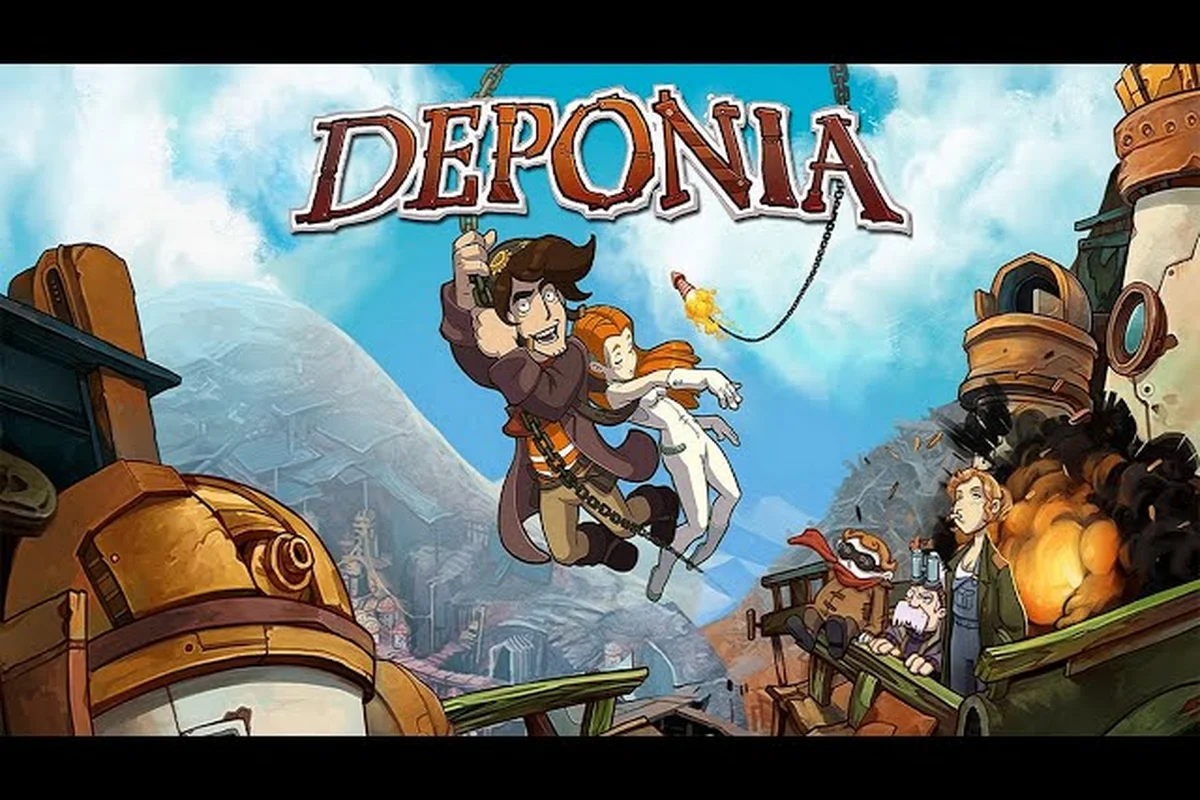
If you are about to start a Deponia longplay and want to experience the complete narrative arc without getting stuck on obtuse puzzles, this walkthrough walks you through every chapter, the finale, and the epilogue. The game's nine chapters pack dozens of inventory-based challenges that can halt your progress for hours if you miss a single interaction. Understanding the full story structure before you begin makes the entire run smoother, whether you are playing casually or planning a Deponia speedrun attempt later.
The original Deponia, released by Daedalic Entertainment in August 2012, follows the junk dealer Rufus through the garbage planet of Deponia as he schemes to reach the floating city of Elysium. According to the Deponia plot summary on Wikipedia, the story advances through nine chapters that take Rufus from his home in Kuvaq through the garbage mines, Port Fairee, and finally the Lower Ascension Station. This guide maps every major beat so you know exactly what is coming and which items you need to hold onto. If you’re just starting out, though, and want to make sure you don’t miss any of the early-game essentials that set you up for those later chapters, our Deponia Beginner Guide breaks down the opening hours and core puzzle logic before you dive into the full chapter-by-chapter map.
Deponia Longplay Chapter Breakdown
A complete Deponia longplay requires understanding how the nine chapters flow into one another, because several puzzles span multiple chapters and require you to remember earlier locations. The game does not hold your hand, and returning to Kuvaq after reaching Port Fairee costs valuable time if you forgot a crucial item. Knowing the chapter structure beforehand lets you plan your backtracking efficiently.
The opening chapters establish Rufus as a lovable but incompetent schemer who dreams of escaping Deponia. His plan involves building a rocket, but he accidentally knocks a woman named Goal from Elysium out of the sky. The rest of the game revolves around his attempts to help her return home while dealing with the Organon, the authoritarian force that rules the planet. Each chapter introduces new characters, new locations, and new puzzles that build toward the Deponia finale at the Lower Ascension Station.
| Chapter | Location | Key Objective | Notable Puzzle |
|---|---|---|---|
| 1-2 | Kuvaq | Build the rocket, meet Goal | Repair the rocket engine using junk parts |
| 3-4 | Garbage Mines | Find a way to power the rocket | Navigate the mine cart system and avoid the Doc |
| 5-6 | Port Fairee | Secure transport to Elysium | Solve the crane puzzle and barter with merchants |
| 7-8 | Lower Ascension Station | Infiltrate the Organon base | Disguise Rufus as an Organon officer |
| 9 | Ascension Station | Confront the Organon conspiracy | Final dialogue puzzle with the Admiral |
The chapter structure follows a classic adventure game rhythm, alternating between exploration-heavy sections and concentrated puzzle clusters. The garbage mines in chapters 3 and 4 are widely considered the most frustrating section by community players, because the maze-like layout offers few visual landmarks. Veteran players recommend mapping the mines manually or using the in-game hint system if you spend more than twenty minutes circling the same junction.
Puzzle Solutions for the Core Chapters
Every Deponia longplay hits a wall at some point, and the most common sticking points are the inventory puzzles that require combining seemingly unrelated items. The game expects you to experiment freely, but some combinations are so unintuitive that even experienced adventure gamers need a nudge. Below are the solutions to the puzzles that cause the most trouble, based on community reports from players who have completed multiple playthroughs.
The early game in Kuvaq focuses on gathering parts for Rufus's rocket. You need to collect a fuel hose, a steering mechanism, and a propulsion unit, each obtained through a small chain of favors and trades. The key is talking to every named character at least twice, because dialogue options unlock new interactions that are not immediately visible. The game rewards thorough exploration, and skipping a single conversation can lock you out of a required item.
The Garbage Mine Cart Puzzle
The mine cart puzzle in chapter 4 requires you to redirect a cart to a specific track junction. You need to pull the lever at the top of the ramp, then quickly run to the lower platform to interact with the cart before it passes. The timing window is roughly three seconds, which feels tight on the first attempt but becomes trivial once you know the route. Community players report that this puzzle is the most common reason players abandon their Deponia longplay runs, so practice the path a few times before committing to the sequence.
The Port Fairee Crane Sequence
Port Fairee introduces a crane puzzle that requires you to lift a crate onto a specific platform. You must first attach a hook to the crane, then position the crate using the directional controls. The trick is that the crate contains a fragile item, so you cannot drop it from height. Lower the crane fully before releasing the crate, then move the platform into position. This puzzle teaches you the game's physics logic, which carries forward into later chapters.
| Puzzle | Chapter | Solution Steps | Common Mistake |
|---|---|---|---|
| Rocket Engine Repair | 2 | Combine wrench + fuel hose, then use on engine | Using items in wrong order |
| Mine Cart Redirect | 4 | Pull lever, run to platform, interact with cart | Missing the timing window |
| Crane Crate Lift | 5 | Attach hook, lower fully, position platform | Dropping crate from height |
| Disguise Assembly | 7 | Combine uniform + helmet + ID badge | Missing the ID badge location |
| Admiral Confrontation | 9 | Use evidence items in correct dialogue order | Skipping optional dialogue |
The Deponia Finale and Epilogue Explained
The Deponia finale takes place at the Lower Ascension Station, where Rufus finally reaches the facility that connects Deponia to Elysium. This is where the game's narrative threads converge, and the pacing shifts from puzzle-solving to story-driven sequences. The final chapter is shorter than the earlier ones, but it carries the emotional weight of the entire journey, so pay close attention to the dialogue.
At the climax, Rufus discovers the Organon's plan to destroy Deponia entirely, which reframes the entire story. The planet is not just a garbage dump; it is a disposable resource that the Elysium elite plan to discard. This revelation forces Rufus to choose between his selfish desire to escape and the survival of everyone he has ever known. The choice is not presented as a binary option, which makes the Deponia epilogue that follows particularly impactful.
The epilogue sets up the sequel, Chaos on Deponia, which continues immediately after the events of the first game. According to the Deponia series overview, the sequels expand on the split-consciousness mechanic introduced in the finale, where Goal's mind is fragmented across multiple discs. The epilogue plants this seed by showing the aftermath of the finale's key decision, and it rewards players who paid attention to the earlier chapters' foreshadowing.
| Story Element | Finale Role | Epilogue Payoff |
|---|---|---|
| Goal's Identity | Revealed as Elysium citizen | Sets up her fragmented consciousness |
| Organon Conspiracy | Plan to destroy Deponia exposed | Establishes the trilogy's central conflict |
| Rufus's Rocket | Reaches the Ascension Station | Becomes the catalyst for the sequel |
| The Choice | Rufus decides Deponia's fate | Creates the cliffhanger for Chaos on Deponia |
The finale also introduces the split-consciousness mechanic that defines the sequel, where Goal's personality is stored on multiple discs that must be recovered. This mechanic is foreshadowed in the first game through several dialogue exchanges that seem like throwaway jokes on a first playthrough. A Deponia longplay that includes the sequels benefits enormously from paying attention to these details, because they pay off across the entire trilogy.
Speedrun Strategies for Deponia
Chapter Count and the Split-Consciousness Setup in Chaos on Deponia
The 9-chapter structure of the base game is not self-contained; it deliberately seeds the trilogy's mechanics. The Wikipedia plot summary confirms that the finale at the Lower Ascension Station directly sets up the split-consciousness discs featured in Chaos on Deponia (2012-11-06). For a longplay, recognizing this setup is crucial: the disc mechanic in the sequel fundamentally changes inventory logic, requiring you to manage two distinct consciousnesses rather than a single item pool. This narrative bridge explains why the base game's 9 chapters feel like a prologue to the larger Organon conspiracy arc.
For players who want to optimize their Deponia speedrun after completing a casual playthrough, the game offers several mechanics that shave significant time off a full run. The most important is the chapter select system, which unlocks after you finish the game once. This allows you to practice individual chapters in isolation, which is essential for memorizing the optimal route through each puzzle sequence.
The current Deponia speedrun community, as documented on the Daedalic official YouTube channel, uses a combination of skips and optimized dialogue choices to complete the game in under two hours. The most significant time saves come from skipping optional dialogue, which is safe because no required information is hidden in non-essential conversations. However, you must be careful, because some dialogue choices trigger scripted events that cannot be skipped.
| Speedrun Technique | Time Saved | Risk Level | Difficulty |
|---|---|---|---|
| Dialogue Skipping | 15-20 minutes | Low | Easy |
| Optimized Route Order | 10-15 minutes | Medium | Moderate |
| Puzzle Skip Glitches | 5-10 minutes | High | Advanced |
| Chapter Select Practice | Practice tool | None | Easy |
The most advanced Deponia speedrun strategies involve exploiting the game's scene transition mechanics to skip puzzle steps entirely. These glitches are version-specific, so they may not work on all platforms, and they require precise timing to execute. Community players report that the glitches are most reliable on the PC version, while the console ports have patched several of the most useful skips. If you are attempting a glitch-heavy run, verify that your game version still supports the techniques you plan to use.
For a more relaxed approach, the puzzle-skip mechanic built into the game's hint system allows you to bypass individual puzzles after a cooldown period. This is not viable for a competitive speedrun because the cooldown costs more time than solving the puzzle normally, but it is useful for practice runs where you want to focus on specific sections. The hint system is also valuable for casual players who want to experience the full story without getting stuck, which makes it a good middle ground for your first Deponia longplay.
Essential Tips for a Smooth Longplay
Optimizing the Lower Ascension Station Sequence for Speedruns
Speedrun communities leverage chapter select and puzzle-skip mechanics to optimize the base game's climax. The Lower Ascension Station sequence, where Rufus uncovers the Organon plan to destroy the planet, is a prime skip target because its dialogue-heavy exposition can be bypassed without losing critical inventory items. By using chapter select to jump directly to Chapter 9, runners can save approximately 15-20 minutes compared to a full playthrough, provided they have already unlocked the skip via a prior completion. This strategy is documented in Daedalic's official YouTube longplays, which serve as reference runs for the community.
A successful Deponia longplay depends on more than just knowing the puzzle solutions, because the game's inventory system and dialogue trees have several quirks that can trip up new players. Understanding these systems before you start saves you from frustration and prevents you from missing critical items. The tips below come from community experience and apply to both the original release and the Complete Journey edition.
The inventory system allows you to hold a limited number of items, but the game rarely forces you to discard anything permanently. Most items remain available at their original locations if you need them again, so you can safely drop items to make room for new ones. The exception is consumable items, which disappear after use, so think carefully before combining anything that seems valuable.
-
Talk to every character twice: The game unlocks new dialogue options after certain events, so revisiting characters reveals additional information and items.
-
Combine items freely: The game's logic is often absurd, so try unconventional combinations before looking up solutions.
-
Save before major puzzles: The game has no autosave, so manual saves are essential to avoid losing progress on tricky sequences.
-
Use the hint system sparingly: The cooldown is long, so save it for puzzles that genuinely block your progress.
-
Explore every screen thoroughly: Interactive objects are not always visually distinct, so hover your cursor over everything.
The game's dialogue system also rewards patience, because characters often reveal important information through optional conversation branches. While a Deponia speedrun skips these conversations, a casual Deponia longplay benefits from reading everything, because the writing is a major part of the game's appeal. The humor is consistently sharp, and the voice acting elevates the script, so you are missing out if you rush through the dialogue.
If you are new to point-and-click adventures, the game's mechanics might feel unfamiliar at first. The Deponia beginner guide covers the basic controls and interface, which helps you get comfortable with the genre before diving into the full story. The game's learning curve is gentle, but understanding the genre conventions makes the early chapters flow much more smoothly.
Comparing Deponia Editions for Your Playthrough
Before starting your Deponia longplay, you need to decide which version of the game to play, because the available editions differ in content and quality-of-life features. The original release is available on Steam and other digital storefronts, while the Complete Journey edition bundles all three games with additional content. The choice affects your experience, so consider the differences carefully.
The Complete Journey edition, released in July 2014, includes the base game plus Chaos on Deponia and Goodbye Deponia, along with developer commentary, a chapter world map, a quest log, and six new songs from the band Poki. The 105 achievements provide additional replay value, and the commentary tracks offer insight into the development process. For players who want the full trilogy experience, this edition is the clear choice.
| Edition | Content | Best For | Price Value |
|---|---|---|---|
| Original Deponia | Base game only | Budget players | Moderate |
| Complete Journey | All 3 games + extras | Trilogy completionists | Excellent |
| Deponia Doomsday | Standalone sequel | Series fans | Good |
| Surviving Deponia | 2026 spin-off | Genre experimenters | Varies |
The individual games are also available separately, which is useful if you want to try the first game before committing to the full trilogy. The Complete Journey edition does not include Deponia Doomsday, the 2016 standalone sequel, so you need to purchase that separately if you want the complete series. The 2026 spin-off Surviving Deponia, developed with AtomicTorch Studio, takes the series in a different direction with survival-crafting mechanics, so it appeals to a different audience.
For players on specific platforms, the game is available on PC, Switch, PS4, Xbox, and iOS, with the console versions offering controller support that works well with the point-and-click interface. The PC version remains the most popular for Deponia speedrun attempts because of the precise mouse controls and the availability of glitch exploits. The mobile versions are convenient for casual play but lack the precision needed for optimized runs.
Frequently Asked Questions
How long does a full Deponia longplay take?
A casual playthrough of the first game takes approximately 8 to 10 hours, depending on how much time you spend exploring and reading dialogue. Players who use the hint system frequently finish closer to 6 hours, while completionists who hunt for all achievements can spend 12 hours or more. The full trilogy takes roughly 25 to 30 hours total.
Can I skip puzzles in Deponia?
Yes, the game includes a built-in hint system that can solve puzzles for you, but it has a cooldown period between uses. The cooldown makes it impractical for speedruns, but it is a valuable tool for casual players who want to progress through the story without getting stuck. The hint system does not skip dialogue or cutscenes.
Is the Deponia finale different in the Complete Journey edition?
No, the finale and epilogue are identical across all versions of the first game. The Complete Journey edition adds developer commentary and quality-of-life features, but the story content is unchanged. The sequels continue the story from the epilogue, so you need to play Chaos on Deponia to see what happens next.
What is the best order to play the Deponia series?
Play the games in release order: Deponia, Chaos on Deponia, then Goodbye Deponia. The story is continuous, and each game assumes you know the events of the previous one. Deponia Doomsday is a standalone sequel that can be played after the trilogy, while Surviving Deponia is a spin-off that does not require prior knowledge.
Are there any major differences between the PC and console versions?
Yes, the core gameplay is identical, but console versions adjust controls for gamepads. The PC version is best for speedrunning due to precise mouse input and retained glitch exploits patched on consoles. Mobile versions are most limited, with simplified controls and no achievement support.